Sebi, however, allowed wilful defaulters to make counter-offers to avoid hostile takeovers

'India-China economic ties are likely to take a hit in the wake of the new situation, but that also provides India with a new opportunity to strengthen its manufacturing base,' points out Dr Rajaram Panda.

If indeed the gate opens for big industrial houses, the RBI needs to be smarter than them and demonstrate it through action, not reaction, observes Tamal Bandyopadhyay.

Twenty years after India's insurance sector was opened up, unshackling the control of state-owned companies, as many as 50 private players have set up shop. Along with their foreign partners, private players have brought about a sea change in the product offering, distribution and underwriting processes, and services levels. Yet, India's insurance penetration needle has not moved much.
In his first comments after resigning as RBI governor on December 10 last year amid sharp differences with the government, Patel said banks indulged in over-lending, while the government did not "fully play" its role, and also conceded that the regulator should have acted earlier.
Collection dived to 75-80% in November-December from 99% after demonetisation.

Swiss authorities have always maintained that assets held by Indian residents in Switzerland cannot be considered as 'black money' and they actively support India in its fight against tax fraud and evasion.
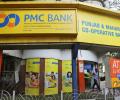
Mired in corruption, politics and with a history of suicides by its hapless depositors, PMC Bank's revival is a challenge very different from Yes Bank and LVB, both for the regulator and the rescuer, observes Tamal Bandyopadhyay.

The Ministry of Corporate Affairs had taken various steps to protect small investors.

Not all NPAs are treated as wilful defaulters.

The finance ministry has put out a revised draft in public domain.

If banks cannot charge interest from borrowers during the moratorium, who will bear that cost? Should the depositors subsidise the borrowers by foregoing interest on deposits? In that case, we will turn banking on its head! notes Tamal Bandyopadhyay.

The Union Budget 2016-17 has cheered the NBFC sector

While the crackdown is a major step in combating tax evasion and improving transparency, it might also impact the flexibility and genuine corporate structures created to achieve legitimate objectives, says Suresh Surana.

Kolkata tops the list with 617 cancellations, New Delhi stands second with 203, followed by Mumbai at 190.
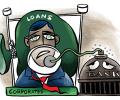
According to ICRA, even in a high-growth scenario, wherein the second half of FY20 sees the incremental bank credit rise to Rs 6.5-7 trn, there will still be a 40-45% year-on-year decline.

'The economy is expected to bounce back and things are expected to recover faster than what we previously thought.'
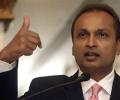
The company also expects to benefit in its proposed banking foray through partnership with Japan's Sumitomo Mitsui Trust Bank and Nippon Life Insurance

A bunch of CEOs in their mid-30s and early 40s are trying to rectify the scenario where shady lending applications trap hapless borrowers with astronomically high interest rates and even bodily harm if the money was repaid. Anup Roy reports.
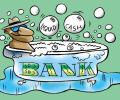
During the fourth quarter (January-March), banks step up the activity to meet annual targets. This leads to a race to raise funds from markets often by jacking up deposit rates. This time around, the market has not seen such trend yet.

In the first eight months of 2019, 70 per cent stocks in the BSE 500 universe were down. These stocks account for 94 per cent of India's total market capitalisation.

A well-run non-banking company has better margins than a bank, but the objective of setting up Ujjivan was to provide comprehensive financial inclusion, Ujjivan Small Finance Bank MD & CEO Samit Ghosh tells Anup Roy in an interview.

From FY18, Ind-AS will be mandatory for all listed entities, barring those listed on the SME platform.

'The RBI is something like a seat belt. As a driver, the driver being the government, it has the possibility of not putting on a seat belt but of course if you do not put on your seat belt you get into an accident and the accident can be quite severe,' Raghuram Rajan told CNBC TV18. 'The aim of the board is to be Rahul Dravid -- sensible, thoughtful and not, with due respect, Navjot Sidhu,' he added.

Payments banks are niche banks set up by the Reserve Bank of India to further the agenda of financial inclusion.

The general nervousness because of the IL&FS default will prevail in the system for now.

The decline is attributed to lower salary growth and a rise in households' financial liabilities.

For FY21, CSB is looking at growth of around 25 per cent and is confident of doubling it in two years. And it is also exploring options to acquire a mid-size bank with a good client base and branches in the north to acquire an all-India presence.

Stocks of companies where promoters have pledged a high percentage of shares, like the Zee group, can be volatile. Such stocks are also prone to rumours, reports Sanjay Kumar Singh.

A day after applying for a bank licence, Aditya Birla Group chairman Kumar Mangalam Birla on Wednesday said the new bank licence norms announced by the Reserve Bank are not discriminatory towards large corporate houses.

A senior official with Muthoot Finance said the group would also want to apply for a universal licence.

YES Bank, Bank of Baroda, SBI, IndusInd Bank, and RBL Bank are amongst the banks, Jefferies says, are most prune to "high risk" emanating from ADAG, Cox & Kings, CG Power, DHFL and Essar Shipping.

In 2018, venture debt providers cumulatively deployed Rs 1,300 crore. This year, the market is expected to absorb venture debt of Rs 1,800 crore to Rs 2,000 crore. So what makes this asset class so attractive?

Indian regulators have identified certain groups as 'financial conglomerates' and they are being monitored closely for any systemic risks they may pose.

Even today, many MFIs already distribute pension and micro insurance products to low-income households.
'The shadow banks are currently facing a liquidity and solvency crisis.' 'The danger is that it could potentially engulf the entire financial system because shadow banks have borrowed huge amount of money from banks, mutual funds, pension funds, and insurance companies.'

What connects P S Jayakumar of Bank of Baroda, V Vaidyanathan of Capital First Ltd and Chandra Shekhar Ghosh of Bandhan?

Government-owned companies are more generous in rewarding their shareholders with dividends.

From Ranbaxy to Religare, Aashish Aryan takes you through a maze of legal cases involving Malvinder Mohan Singh and his younger brother Shivinder Mohan Singh. Both are in police custody following a complaint of fund siphoning.
